The Essential Guide to Facial Sunscreens
Sun Care
Discover how to choose the ideal sunscreen for your skin type and which formulas really make a difference.

How to choose the ideal sunscreen for your skin type
1. Oily or combination skin
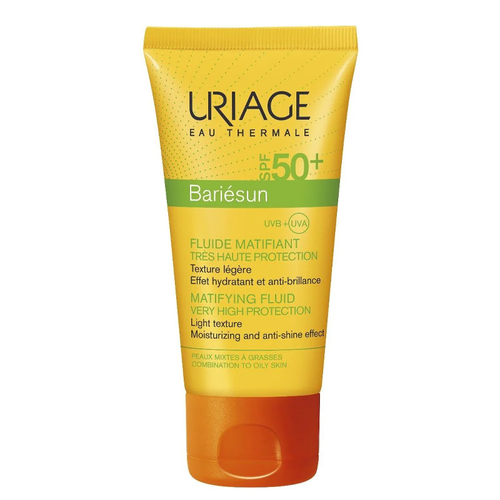
Those looking for a matte finish, without shine throughout the day, should opt for ultra-light, oil-free textures. A widely used option for this skin type is Uriage Bariésun Mat Fluide SPF50+, known for its lightweight texture and immediate dry touch, ideal for controlling excess oil, especially during hot months.
2. Normal or combination skin preferring water-based textures
If you enjoy a fresh, light, and barely-there feeling, water-based sunscreens are excellent allies. The ISDIN Fusion Water Magic SPF50 is often cited as a daily favorite due to its ultra-fast absorption and invisible finish, perfect for those who wear makeup on top.
3. Sensitive, reactive skin or prone to redness
Sensitive skin requires hypoallergenic, high-tolerance formulas with soothing ingredients. The SVR Sensifine AR Crème SPF50+ is a reference for those dealing with rosacea, persistent redness, or irritation, providing high protection with a comfortable, smooth texture.
4. Skin with dark spots or prone to hyperpigmentation
For those looking to even out skin tone and prevent dark spots, sunscreens with complementary depigmenting action are worth considering. The Neostrata Enlighten Skin Brightener SPF35 combines sun protection with brightening ingredients, making it an interesting option for routines targeting sun spots, melasma, or dull complexion.
5. Sun-intolerant or very sensitive skin
There are cases where the skin reacts even to small amounts of light. In these specific cases, high biological protection sunscreens are essential. One of the most well-known is the Esthederm Intolérances Solaires Crème, formulated to strengthen the skin's tolerance to the sun and ensure comfort even during moderate exposure.
Textures, filters and extras: what’s worth considering
- Mineral vs. chemical filters:
Mineral filters are great for sensitive and reactive skin but tend to leave a slight white residue. Chemical filters offer lighter and invisible textures. - Water resistance:
Especially important during summer, at the beach, during sports, or with heavy sweating. - Additional ingredients:
Antioxidant vitamins, niacinamide, and soothing agents can help better protect the skin against visible light and external aggressors. - Makeup compatibility:
Fluid textures, dry-touch or water-based formulas generally work best as a primer.
How to apply sunscreen correctly
-
Always use the correct amount — equivalent to two lines of product on the index and middle finger to cover the face and neck.
-
Reapply every 2–3 hours if outdoors.
-
Don’t forget the neck, ears, hairline, and hands.
-
Apply as the last step of your skincare routine, before makeup.
The best facial sunscreen is the one that adapts to your skin and lifestyle. Water-based textures for those who want a light feel, soothing formulas for sensitive skin, mattifying solutions to control shine, or specific care for dark spots — today there are options for every need. Incorporating this step daily is the most important investment you can make in the long-term health and beauty of your skin.
Look for hypoallergenic, fragrance-free formulas with soothing ingredients. Products specifically created for sensitivity and redness ensure higher tolerance and lower risk of irritation.
The difference isn’t as large as it seems: SPF 30 blocks around 97% of UVB radiation, while SPF 50 blocks approximately 98%. However, SPF 50 provides an additional safety margin, especially for sensitive, very fair, or blemish-prone skin.
It depends. If you are near windows or exposed to direct sunlight, reapply every 2–3 hours. If in an environment without natural light, reapplication can be less frequent, but still recommended on brighter days.
It’s not ideal. Body sunscreens usually have thicker textures and may not be suitable for the more sensitive or oily skin of the face. Facial sunscreens are formulated to ensure comfort, better absorption, and higher tolerance.
Not necessarily. Ideally, apply sunscreen as the last step of your routine, after moisturizer. Some sunscreens offer additional benefits (like oil control or soothing action), but do not completely replace a treatment cream.